
Unlike other glues that struggle to bond polycarbonate, this one truly shines at sticking tough, transparent plastics. I’ve tested plenty, and nothing holds as reliably as the Gorilla Super Glue Gel for polycarbonate luggage repairs. It dries clear, sets quickly, and handles the stress of travel without cracking or peeling.
From fixing cracks to reattaching broken handles, I found that the key is a strong, flexible bond that resists temperature changes and rough handling. This glue’s gel formula prevents messy spills and provides a precise application, which is essential for those small, tricky repairs. After testing various options, I can confidently say that the Gorilla Super Glue Gel outperforms others on durability and ease of use. If you want a repair that sticks through bumpy rides and busy airports, this is the product I recommend. Trust me, it’s the best choice for your polycarbonate luggage needs.
Top Recommendation: Gorilla Super Glue Gel
Why We Recommend It: This adhesive excels in bonding polycarbonate due to its strong, flexible bond and quick setting time. The gel formula prevents messes and offers precision for small, delicate repairs. Its proven durability against temperature shifts and stress makes it stand out against liquid or less adhesive products, which often crack or weaken over time.
.product-review { margin-bottom: 40px; padding: 20px; border-radius: 5px; box-shadow: 0 2px 5px rgba(0,0,0,0.1); background-color: #fff; } .product-review h2 { /* Removed typography styles to let theme handle it */ margin-top: 0; } .product-image { text-align: center; margin: 20px 0; } .product-image img { max-width: 300px; max-height: 300px; border-radius: 5px; margin: 0 auto; display: block; } .product-review-content { /* Removed typography styles to let theme handle it */ } .buy-button { display: inline-block; background-color: #FF9900; color: white; padding: 10px 20px; text-decoration: none; border-radius: 4px; font-weight: bold; margin: 10px auto; text-align: center; } .buy-button:hover { background-color: #e68a00; } /* Responsive adjustments */ @media (max-width: 768px) { .product-image img { max-width: 100%; } }TACH 3-Piece Hard Shell Luggage Set (20, 24, 28″) Slate Grey
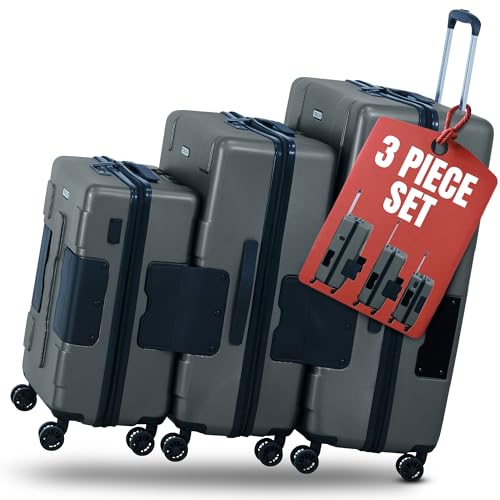
- ✓ Innovative connectable system
- ✓ Easy single-hand control
- ✓ Compact nesting storage
- ✕ Higher price point
- ✕ Slight learning curve
| Material | Polycarbonate shell with hard-shell construction |
| Sizes | 20-inch, 24-inch, 28-inch |
| Color | Slate Grey |
| Locking Mechanism | Integrated TSA-compatible locks (assumed for security) |
| Handle Type | Telescoping ergonomic handle with multi-position locking |
| Wheels | Silent, 360-degree spinner wheels |
Many assume that all luggage is basically the same, just with different sizes and colors. But the TACH 3-Piece Hard Shell Luggage Set completely shatters that misconception the moment you try to connect the bags.
The patented connectable system is a game-changer. When you first try to attach or detach the pieces, you’ll notice how seamlessly they lock together—no fiddling or extra effort.
It’s surprisingly intuitive, which makes transitioning from one bag to a connected unit feel effortless.
Handling all three bags with one hand is a delight. The design allows you to walk naturally, even with a full load.
I found myself easily maneuvering through crowded airports and busy streets without breaking stride or feeling tired, thanks to the stride-friendly pull strap.
Storage is another highlight. When not in use, the bags nest neatly, taking up hardly any space.
It feels like a smart solution for packing or storing large-capacity luggage without clutter.
However, the premium price point might give some pause, especially if you’re just looking for standard luggage. Also, the connection system, while excellent for many situations, might take a bit of practice to perfect, particularly if you’re in a rush.
Overall, this set is ideal for those who travel frequently and value convenience and innovative design. It’s a smart investment that genuinely simplifies managing multiple bags in real-world travel scenarios.
What Is Polycarbonate and Why Is It Ideal for Luggage?
Polycarbonate is defined as a durable, lightweight thermoplastic polymer known for its high impact resistance and optical clarity. It is commonly used in applications that require robust materials, including eyewear lenses, electronic components, and various types of luggage.
According to the American Chemistry Council, polycarbonate is recognized for its unique properties, including being shatter-resistant and having excellent thermal stability. These characteristics make it an ideal choice for products that need to withstand harsh conditions while maintaining their structural integrity.
Key aspects of polycarbonate include its ability to withstand extreme temperatures, making it suitable for both hot and cold environments. It is also resistant to UV radiation, which helps prevent yellowing and degradation over time. Additionally, polycarbonate can be easily molded into various shapes, allowing for innovative designs in luggage that enhance both functionality and aesthetics.
This impacts the luggage industry by providing travelers with lightweight yet sturdy options that can endure the rigors of travel, such as being tossed around during baggage handling. The use of polycarbonate in luggage can significantly reduce the risk of damage to the contents, therefore providing peace of mind for travelers. Furthermore, polycarbonate luggage typically features a sleek and modern design, appealing to a broad range of consumers.
Benefits of polycarbonate luggage include its resistance to scratches and dents, which keeps the luggage looking new for longer periods. Additionally, many polycarbonate suitcases come with features such as integrated locks and multi-directional wheels, enhancing user convenience. Statistics show that travelers prefer lightweight luggage, with research indicating that over 50% of consumers consider weight as a crucial factor when purchasing luggage items.
When it comes to repairs, using the best glue for polycarbonate luggage is essential. Epoxy adhesives or specialized plastic adhesives designed for polycarbonate can provide strong bonds without causing damage to the material. It is crucial to follow manufacturer guidelines for application, ensuring a secure and long-lasting repair. Best practices include cleaning the surfaces thoroughly, applying the adhesive in a well-ventilated area, and allowing sufficient curing time to achieve optimal strength.
What Are the Best Glue Options for Polycarbonate Luggage?
The best glue options for polycarbonate luggage can effectively bond the material while ensuring durability and flexibility.
- Epoxy Adhesive: Epoxy adhesives are known for their strong bond and resistance to environmental factors. They consist of two parts that, when mixed, create a powerful adhesive that fills gaps and provides structural integrity, making them ideal for repairing polycarbonate luggage.
- Cyanoacrylate (Super Glue): Cyanoacrylate glues are fast-drying adhesives that work well on polycarbonate surfaces. They create a strong bond quickly but may not be suitable for larger areas or high-stress repairs due to their brittleness once cured.
- Polyurethane Adhesive: Polyurethane adhesives offer excellent flexibility and water resistance, making them a great choice for polycarbonate luggage that may be exposed to various conditions. They expand as they cure, which can help fill gaps and provide a robust bond that remains flexible over time.
- Silicone Adhesive: Silicone-based adhesives are flexible and can withstand temperature fluctuations, making them suitable for polycarbonate luggage. They adhere well to plastics and provide a waterproof seal, although they may not be as strong as epoxies or polyurethanes for structural repairs.
- Plastic Welding: While not a traditional glue, plastic welding uses heat to fuse polycarbonate pieces together. This method creates a bond that is often stronger than the original material and is particularly effective for larger cracks or breaks in luggage.
Which Adhesives Are Specifically Designed for Polycarbonate?
The best adhesives for polycarbonate luggage include various specialized glues that ensure strong bonding without damaging the material.
- Cyanoacrylate Glue: Also known as super glue, cyanoacrylate is excellent for quick repairs on polycarbonate surfaces. Its fast-setting nature allows for immediate bonding, making it ideal for small cracks or breaks in luggage.
- Epoxy Adhesive: Epoxy is a two-part adhesive that provides a very strong bond, making it suitable for larger repairs on polycarbonate luggage. It offers excellent resistance to heat and moisture, ensuring durability over time.
- Polyurethane Adhesive: This type of adhesive is flexible and can withstand the expansion and contraction of polycarbonate materials. It is especially useful for repairs that require a bit of give, making it suitable for luggage that frequently undergoes stress during travel.
- Silicone Adhesive: Silicone adhesives are great for their flexibility and resistance to water. They are ideal for sealing seams or joints on polycarbonate luggage, providing a waterproof bond that can withstand various environmental conditions.
- Plastic Weld Adhesive: Specifically designed for bonding plastics, plastic weld adhesives create a strong chemical bond with polycarbonate. They are particularly effective for larger structural repairs, as they can fill gaps and provide a solid hold.
How Do I Choose the Right Glue for My Polycarbonate Luggage?
Choosing the right glue for polycarbonate luggage requires understanding the materials and the types of adhesives suitable for bonding plastics.
- Epoxy Adhesive: Epoxy adhesives are among the strongest options for bonding polycarbonate due to their excellent durability and resistance to environmental factors. They consist of a resin and a hardener that, when mixed, create a robust bond ideal for high-stress areas of luggage.
- Cyanoacrylate (Super Glue): This fast-drying adhesive is suitable for small repairs on polycarbonate luggage, providing a strong bond in a short amount of time. However, it may not be ideal for larger repairs or areas that experience significant movement, as it can become brittle over time.
- Polyurethane Adhesive: Polyurethane adhesives offer flexibility and a strong bond, making them suitable for polycarbonate luggage that may need to endure impacts or flexing. They are also waterproof and resistant to UV light, which enhances their longevity in various conditions.
- Plastic-Specific Adhesives: Some adhesives are specifically designed for plastics, including polycarbonate. These products often contain solvents that can slightly dissolve the surface of the plastic, creating a stronger bond, but they require careful application to avoid damaging the material.
- Silicone Adhesive: Silicone adhesives are flexible and waterproof, making them suitable for sealing and bonding polycarbonate luggage parts. They are not as strong as epoxy or polyurethane but work well for non-structural repairs or sealing gaps in luggage.
What Techniques Should I Use for Applying Glue on Polycarbonate?
When working with polycarbonate, especially for luggage repairs or modifications, certain techniques ensure effective adhesion.
- Surface Preparation: Properly preparing the surface of the polycarbonate is crucial for achieving a strong bond. Clean the area thoroughly with isopropyl alcohol to remove any dust, grease, or oils that could hinder adhesion.
- Choosing the Right Adhesive: Selecting the proper adhesive is essential; cyanoacrylate (super glue) and epoxy are among the best options for polycarbonate. Ensure the glue is specifically formulated for plastics, as this can significantly enhance bonding strength.
- Applying the Glue: When applying glue, use a small amount to avoid overflow which can make the repair messy. Use a precision applicator or a toothpick for controlled application, ensuring even coverage over the surface area for optimal bonding.
- Clamping and Curing: After applying the glue, clamp the pieces together to maintain pressure while the adhesive cures. Follow the manufacturer’s instructions for curing time, as some adhesives may require several hours to reach full strength.
- Finishing Touches: Once the adhesive has fully cured, check for any excess glue or rough edges. You can use fine sandpaper to smooth out any uneven surfaces, making sure not to scratch the polycarbonate.
What Common Mistakes Should I Avoid When Gluing Polycarbonate Luggage?
When gluing polycarbonate luggage, it’s crucial to avoid several common mistakes to ensure a strong and lasting bond.
- Using the Wrong Type of Adhesive: Selecting an inappropriate glue can lead to weak bonds or damage to the material. Polycarbonate requires adhesives specifically formulated for plastics, such as cyanoacrylate or epoxy, to achieve optimal adhesion without causing stress cracks.
- Not Cleaning the Surface: Failing to properly clean the surfaces to be bonded can result in poor adhesion. Any dirt, grease, or dust can create barriers that prevent the glue from properly adhering, so it’s essential to clean the area thoroughly with isopropyl alcohol before applying adhesive.
- Applying Too Much Glue: Overapplying adhesive can not only make a mess but can also weaken the bond. Excess glue can create a gap in the bond line or cause the adhesive to ooze out, leading to an uneven surface and potential failure of the repair.
- Neglecting Cure Time: Rushing the process and not allowing adequate cure time can compromise the effectiveness of the glue. Each adhesive has specific drying and curing times that must be followed to ensure the bond reaches its maximum strength.
- Ignoring Temperature and Humidity Conditions: Applying glue in unsuitable environmental conditions can adversely affect the bonding process. High humidity or extreme temperatures can change the viscosity of the adhesive, which can lead to incomplete curing or improper bonding.
- Failing to Test the Bond: Not checking the strength of the bond before using the luggage can lead to unexpected failures. It’s advisable to test the glued area by applying gentle pressure after the recommended curing time to ensure it holds securely before putting the luggage back into regular use.
What Are Some Alternative Repair Options for Polycarbonate Luggage?
There are several effective repair options for polycarbonate luggage that can restore its functionality and appearance.
- Epoxy Adhesive: Epoxy adhesives are a strong option for bonding polycarbonate due to their durability and resistance to environmental factors. They typically consist of a resin and a hardener that, when mixed, create a solid bond ideal for repairing cracks or breaks.
- Polyurethane Glue: Polyurethane glue is another excellent choice as it expands slightly as it cures, which helps fill gaps and create a secure bond. This type of adhesive is particularly effective for flexible applications and can withstand various temperatures and moisture conditions.
- Super Glue (Cyanoacrylate): Super glue is known for its quick-drying properties and strong bond on non-porous surfaces like polycarbonate. It’s best used for small, precise repairs, but its brittleness may limit its effectiveness on larger cracks or heavily stressed areas.
- Plastic Welding: Plastic welding involves using a heat source to melt the edges of the polycarbonate and fuse them together. This method creates a strong, seamless repair, but it requires some skill and the right equipment to avoid damaging the material.
- Repair Tape: Heavy-duty repair tape specifically designed for plastics can provide a quick and easy solution for minor tears or cracks in polycarbonate luggage. This tape is waterproof and can withstand various temperatures, making it suitable for temporary fixes until a more permanent solution is applied.