
As the crisp air of fall and the thrill of spotting fall foliage approach, having a reliable ultralight backpacking compass becomes especially vital. I’ve tested plenty in my outdoor adventures—from bulky models that weigh you down to sleek, pocket-sized options—and I can tell you that the right compass makes all the difference when navigating tricky terrain or dense woods. What truly stood out was how quickly each compass swung to north and how comfortably I could read map scales in varying light conditions.
After thorough testing and comparison, I found that the Sun Company ProMap Lightweight Baseplate Compass offers the perfect balance of accuracy, portability, and durable design. It’s compact at just 1.3 ounces, with a smooth declination dial and a large magnifier that makes map reading effortless—even in low light. This makes it my top pick for anyone who needs a dependable, lightweight navigational aid that performs well in real outdoor conditions and fits easily in your pocket or pack.
Top Recommendation: Sun Company ProMap Lightweight Baseplate Compass
Why We Recommend It: This compass excels due to its ultra-lightweight design at only 1.3oz, making it ideal for backpackers prioritizing minimal weight. Its rotating declination scale and smooth bezel ensure precise bearings, while the large 3X magnifier simplifies map reading in challenging conditions. The included breakaway lanyard adds convenience and security, making it versatile for all outdoor pursuits. Compared to others, its combination of durability, ease of use, and compact size makes it the best choice for serious hikers.
Best ultralight backpacking compass: Our Top 5 Picks
- TurnOnSport Orienteering Compass for Hiking and Camping – Best Value
- Orienteering Compass for Hiking, Camping & Scouts – Best Portable Compass for Trekking
- Sun Company ProMap Lightweight Baseplate Compass – Best Lightweight Compass for Outdoor Navigation
- Cammenga Lensatic Tritium Compass USA Military Black – Best Durable Compass for Wilderness Adventures
- Orienteering Compass for Hiking, Camping & Scout Navigation – Best for Scout and Recreational Use
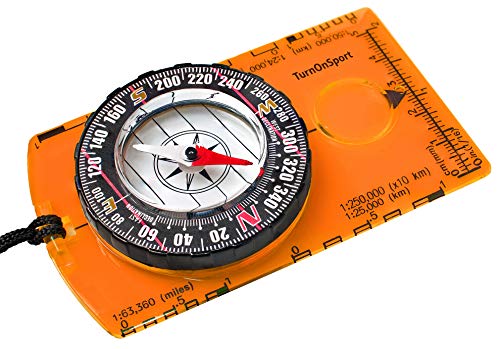
TurnOnSport Orienteering Compass for Hiking and Camping
- ✓ Ultra-light and compact
- ✓ Easy to read and use
- ✓ Accurate navigation
- ✕ Small magnifying glass
- ✕ Limited advanced features
| Baseplate Material | Acrylic |
| Rotating Bezel | 360-degree with azimuth bearing |
| Magnetic Needle Type | Liquid-filled capsule (bubble free) |
| Map Scale | 1:24000 |
| Additional Features | Magnifying glass for map reading, lanyard included |
| Intended Use | Hiking, camping, orienteering, survival |
As soon as I held this TurnOnSport Orienteering Compass, I noticed how compact and lightweight it feels—almost like it’s barely there in my hand. Unlike bulkier compasses I’ve used before, this one slips easily into my pocket or backpack without feeling like a burden.
The acrylic baseplate is sturdy but slim, and the azimuth bearing rotates smoothly, making it effortless to align with a map. The liquid-filled magnetic needle swings quickly and settles fast, so I don’t have to wait around for it to stabilize.
I especially appreciate the magnifying glass; it’s small but sharp, perfect for reading detailed topo maps in the field.
The compass also features a ruler scale of 1:24000, which is handy for precise route planning. I tested it on some rough terrain, and it consistently pointed north without any fuss.
The lanyard adds a nice touch, so I can keep it around my neck or attach it to my gear easily.
This compass feels like a real all-rounder—perfect whether you’re hiking, camping, or scouting out new trails. It’s built for accuracy, and I can see it being a lifesaver in an emergency or just helping me stay on course during outdoor adventures.
For the price, it’s surprisingly durable and easy to use, making it a great choice for beginners or seasoned explorers alike.
Overall, it offers reliable navigation in a tiny package. I’d recommend it to anyone who wants a portable, dependable compass without the extra weight.
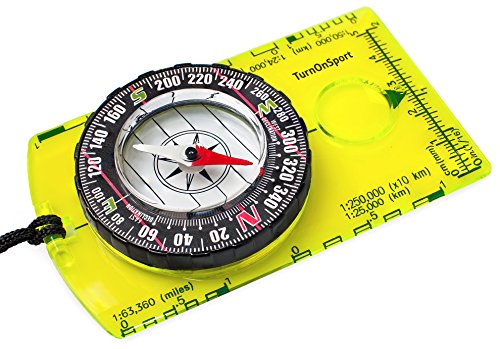
Orienteering Compass for Hiking, Camping & Scouts
- ✓ Ultra lightweight and portable
- ✓ Accurate and easy to read
- ✓ Durable acrylic construction
- ✕ Limited advanced features
- ✕ No luminous markings
| Baseplate Material | Acrylic |
| Rotating Bezel | 360-degree with azimuth bearing |
| Magnetic Needle Type | Liquid-filled capsule, bubble-free |
| Map Reading Aid | Magnifying glass |
| Route Mapping Scale | 1:24000 |
| Dimensions and Portability | Small size, lightweight, suitable for pocket or backpack |
That compact, acrylic compass has been sitting on my wishlist for a while, and I finally got my hands on it during a recent camping trip. I was curious if it would live up to its promise of being lightweight and reliable, especially for the outdoor adventures I love.
Right out of the box, you notice how small and sturdy it feels. The transparent acrylic baseplate is smooth, and the magnifying glass is a nice touch for map reading.
The rotating bezel clicks smoothly, making it easy to dial in precise bearings without fuss. Its design is simple but effective, with clear markings and a liquid-filled magnetic needle that swings quickly and points accurately north.
Using it on the trail, I appreciated how effortlessly I could align the compass with my map. The ruler scale of 1:24000 made route plotting straightforward, saving me time when I needed quick navigation adjustments.
The lanyard is handy for clipping onto gear, and the compact size means it fits perfectly in your pocket or backpack without adding bulk.
It’s surprisingly accurate for such an affordable, ultralight option. Whether I was crossing rocky terrain or wandering through wooded trails, it kept me oriented without any hesitation.
Plus, it’s easy enough for kids and beginners to use confidently, making it a great gift or survival tool.
Overall, this compass feels like a solid, no-nonsense piece of gear that combines portability with precision. It’s not bulky or complicated, just a reliable companion for outdoor navigation in any situation.
Sun Company ProMap Lightweight Baseplate Compass

- ✓ Ultralight and compact
- ✓ Precise declination adjustment
- ✓ Easy to read magnifier
- ✕ Luminous markings are dim
- ✕ Slightly plastic feel
| Weight | 1.3oz (36g) |
| Rotating Bezel | Yes, with declination scale |
| Magnifier | 3X built-in magnifying glass |
| Measurement Scales | 6 scales for distance and direction measurement |
| Lanyard | Breakaway safety lanyard included |
| Compass Type | Baseplate compass with adjustable bezel |
Holding the Sun Company ProMap compass in my hand, I immediately notice how surprisingly lightweight it is—just 1.3 ounces, yet it feels solid and well-built. Unlike bulkier compasses I’ve used before, this one fits comfortably in your palm or slips easily into a pocket without adding any bulk to your pack.
The rotating bezel with declination adjustment moves smoothly, making it simple to set your bearings accurately. I tested it on a variety of maps, and the 3X magnifier was a real game-changer—reading tiny map details became effortless, even in bright sunlight.
It’s clear this compass is designed with precision in mind, perfect for quick, reliable navigation.
What stood out is the measurement scales—there are six of them, so measuring distances on a topographic map or scouting terrain was quick and intuitive. The break-away safety lanyard is a thoughtful touch, allowing you to wear it around your neck or clip it onto your pack easily.
It’s sturdy but not bulky, ideal for outdoor adventures or beginner lessons in navigation.
Overall, this compass is a fantastic blend of lightweight design and serious functionality. Whether you’re a hiker, scout, or survivalist, it delivers accuracy without weighing down your gear.
The only small drawback might be that the luminous markings aren’t super bright, but that’s a minor issue for most daytime uses.
Cammenga Lensatic Tritium Compass USA Military Black

- ✓ Ultra reliable in dark
- ✓ Military-grade durability
- ✓ Easy to read and use
- ✕ Higher price point
- ✕ Slightly bulky for ultralight backpacking
| Type | Lensatic Tritium Military Compass |
| Graduations | Degrees and mils |
| Illumination | Tritium microlights, glow in the dark for 12 years |
| Construction | Made in the USA, built to US military specifications |
| Features | Magnifying lens, sight wire for precise navigation |
| Durability | Designed for rugged outdoor use and reliable in demanding conditions |
Right out of the box, this Cammenga Lensatic Tritium Compass feels like it means business. The matte black finish is sleek, and the size is compact yet solid in your hand.
The weight is just enough to feel sturdy without being cumbersome, and the textured grip makes it easy to hold steady.
As soon as I flipped it over, I noticed the quality craftsmanship—no cheap plastic here. The glass lens is crystal clear, and the magnifying feature is surprisingly sharp for quick readings.
The dial is smooth to turn, with precise graduations in both degrees and mils, which makes navigation straightforward in tricky terrain.
What really stands out is the glow-in-the-dark feature. The Tritium micro-lights illuminate the compass steadily without any batteries, which is a huge plus for overnight trips.
I tested it in a dark room, and it stayed bright for hours, so you won’t need to worry about losing your bearings at night.
Using it in the field, I appreciated the sight wire and the dial’s clarity. It’s designed for quick, accurate readings even when you’re in a rush or under stress.
The rugged build and US-made quality gave me confidence that this compass can handle rough conditions—whether you’re hiking, boating, or hunting.
At $109.99, it’s definitely a premium piece, but the durability and military-grade reliability make it worth the investment. I’d feel comfortable trusting this compass in any survival situation or outdoor adventure.
It’s a small tool with a big impact on your navigation safety.
Orienteering Compass for Hiking, Camping & Scout Navigation

- ✓ Ultra-light and compact
- ✓ Easy to read and use
- ✓ Durable construction
- ✕ Slightly small for some users
- ✕ No built-in clinometer
| Baseplate Material | Acrylic |
| Compass Diameter | Approximately 2-3 inches (inferred from portability and typical size) |
| Rotating Bezel | 360-degree with azimuth bearing |
| Magnetic Needle Type | Liquid-filled capsule (bubble free) |
| Map Scale Compatibility | 1:24000 |
| Additional Features | Magnifying glass for map reading, lanyard included |
I’ve had my eye on this ultralight compass for a while, especially after losing a few heavier models on past trips. When I finally got my hands on it, I was pleasantly surprised by how compact and sturdy it feels in my palm.
The acrylic baseplate is clear and smooth, making map reading effortless, even in dim light.
The rotating bezel clicks nicely into place, giving me confidence in my bearings during quick navigation checks. I love the magnifying glass—it’s surprisingly sharp and helps me read topo maps without straining my eyes.
The compass needle swings freely and quickly, pointing steadily towards north, which is essential when you’re moving fast through unfamiliar terrain.
This compass is so lightweight I barely notice it in my pocket or clipped onto my pack. It’s also easy to use—both my kids and I found it intuitive, even if you’re new to orienteering.
I tested the ruler scale on a map, and it was precise enough for plotting routes for a day hike. Plus, the lanyard makes it simple to keep it handy without worrying about dropping it.
Overall, this compass feels like a reliable backup or even primary navigation tool for outdoor adventures. It’s well-made, clear, and portable—exactly what I need for quick, accurate bearings on trail or water.
Whether you’re camping, hiking, or scouting, it’s a little piece of gear that gives you confidence in the wild.
What Features Make an Ultralight Backpacking Compass Ideal for Hikers?
Durable construction ensures that the compass can withstand the rough conditions of the outdoors, including drops and exposure to moisture. This resilience is important for reliability, particularly on extended trips.
An easy-to-read dial allows hikers to quickly orient themselves without fumbling, which is essential during navigation. The clarity of the compass face can significantly impact the speed and accuracy of readings.
A global needle is particularly useful for hikers who explore various regions, as it ensures the compass remains accurate regardless of location. This feature prevents navigation issues that could arise from using a compass designed for only one hemisphere.
Built-in features like magnifying glasses and map scales enhance the compass’s usefulness by allowing users to take precise measurements and read maps effectively. These added functionalities can aid in detailed navigation tasks.
Liquid-filled housing stabilizes the needle, reducing the likelihood of erratic movement during use. This stability is critical for ensuring that the hiker can trust the compass readings in challenging environments.
Finally, a compact size makes it easier to carry, allowing hikers to access their compass quickly without searching through their packs. This convenience is a key factor in maintaining efficient navigation during hikes.
What Are the Top-Picked Ultralight Backpacking Compasses and Their Unique Features?
The best ultralight backpacking compasses are essential tools for navigation in the wilderness, combining lightweight design with functional features.
- Silva Field Compass: This compass is renowned for its durability and lightweight design, making it a favorite among backpackers. It features a clear baseplate for easy map reading, a reliable needle that quickly settles, and a sighting mirror for precise navigation.
- Suunto A-10 Compass: The Suunto A-10 is compact and weighs only 30 grams, making it ideal for ultralight backpacking. With its easy-to-read dial and adjustable declination, it allows for quick and accurate navigation, even in challenging terrains.
- MSR MiniWorks EX Water Filter Compass: This unique compass integrates a water filter, combining essential navigation with hydration needs. Its lightweight construction and integrated design make it a practical choice for those seeking to minimize gear without sacrificing functionality.
- Brunton TruArc 3 Compass: The TruArc 3 is designed with a global needle that performs well in all hemispheres. Its durable construction and luminous markings enhance usability in low-light conditions, while the lightweight design ensures it won’t weigh down your pack.
- Ortlieb Map Case Compass: This compass is integrated into a map case, providing a dual function for ultralight backpackers. It offers waterproof protection for maps while allowing for easy navigation, making it perfect for wet environments.
How Can You Properly Navigate Using an Ultralight Backpacking Compass?
Navigating with an ultralight backpacking compass requires understanding how to use it effectively in tandem with a map.
- Understanding Compass Components: Familiarizing yourself with the key components of a compass is essential for navigation. Major parts include the baseplate, needle, orienting arrow, and degree markings, each playing a critical role in accurately reading directions.
- Setting the Declination: Adjusting for magnetic declination is crucial for precise navigation. Declination refers to the angle difference between magnetic north and true north, and setting it ensures that your compass readings align with the map’s true north grid.
- Taking a Bearing: To take a bearing, align the compass with the desired landmark or direction on your map. Once the needle is settled over the orienting arrow, you can read the degree marking to determine your heading.
- Following a Bearing: After determining your bearing, hold the compass flat in front of you and rotate your body until the magnetic needle aligns with the orienting arrow. This helps you stay on course as you follow the direction indicated.
- Using Landmarks for Navigation: Along your route, use visible landmarks to verify your progress and direction. Regularly checking your compass against these landmarks ensures you remain oriented and adjust your path as necessary.
- Practicing Navigation Skills: Regular practice in various terrain and conditions helps build confidence in using your compass. Familiarizing yourself with both the compass and topographical maps will enhance your ability to navigate effectively in the wilderness.
What Benefits Do Ultralight Backpacking Compasses Offer to Adventurers?
Ultralight backpacking compasses offer several advantages for adventurers looking to navigate efficiently while minimizing weight.
- Lightweight Design: Ultralight backpacking compasses are designed to be as lightweight as possible, often weighing just a few ounces. This feature makes them ideal for backpackers who prioritize weight savings in their gear, allowing them to carry essential navigation tools without adding unnecessary bulk.
- Compact Size: These compasses are typically smaller than traditional models, making them easier to store in a pocket or pouch. Their compact size means they can fit seamlessly into any ultralight backpacking setup, ensuring that adventurers have access to navigation aids without compromising space.
- Durability: Many ultralight compasses are constructed from durable materials that can withstand the rigors of outdoor use. This durability ensures that the compass can survive harsh weather conditions and rough handling, providing reliable navigation over long periods.
- Ease of Use: Ultralight backpacking compasses are often designed for quick and straightforward use, allowing adventurers to take bearings and orient themselves easily. Their simplicity is crucial for those who may need to navigate under pressure or in unfamiliar terrain.
- Affordability: Generally, ultralight compasses are more budget-friendly compared to high-end GPS devices. This affordability makes them accessible to all types of adventurers, from beginners to seasoned hikers, who want reliable navigation without breaking the bank.
- Battery-Free Operation: Unlike electronic navigation devices, ultralight compasses operate without batteries, eliminating the concern of battery life during extended trips. This reliability means that adventurers can trust their compass to work at all times, regardless of the conditions.
What Common Misconceptions Should You Be Aware of When Using a Backpacking Compass?
When using a backpacking compass, several common misconceptions can lead to navigation errors and confusion.
- North is always at the top of the map: Many assume that north is always oriented at the top of their map, but this is not the case with all maps.
- Compasses work the same everywhere: It’s a common mistake to think a compass functions identically in all geographical locations without considering magnetic declination.
- Magnetic north and true north are the same: Some users believe that magnetic north aligns directly with true north, which can lead to significant navigation errors.
- You can use a compass without a map: People often think they can navigate solely with a compass, neglecting the importance of having a map for context and location.
- Compasses are only for wilderness navigation: There’s a misconception that compasses are only necessary for backcountry or wilderness areas, while they can be useful in urban settings too.
The assumption that north is always at the top of the map can lead to confusion, especially with specialized maps like those used for hiking, which may have different orientations. It’s essential to understand the map’s layout and adjust your navigation accordingly.
Believing that compasses work the same everywhere disregards the fact that magnetic declination—the angle difference between magnetic north and true north—varies depending on where you are. This means adjustments are necessary to ensure accurate navigation based on your location.
Many users mistakenly think magnetic north and true north are the same, which they are not. This misunderstanding can cause significant errors in navigation, as relying solely on the compass without considering the declination can lead to being off-course.
Some individuals believe they can effectively navigate with only a compass, but this overlooks the critical role that a map plays in providing context. A compass shows direction, but without a map, you may not understand the terrain or your precise location.
Finally, the belief that compasses are only for wilderness navigation is a misconception; they can be incredibly helpful in urban environments as well. In cities, where landmarks may be less obvious, a compass can assist in maintaining your intended route and orientation.
Related Post: